

My Logo

Main Navigation

About Us
Services
Portfolio
Tools
BlogFAQ
Areas We Cover
London
Manchester
Liverpool
Preston
Warrington
Altrincham
Sale
Stockport
Wilmslow
Knutsford
Leeds
Sheffield
York
Hull
Bradford
Newcastle
Birmingham
Coventry
Wolverhampton
Nottingham
Leicester
Derby
Stoke-on-Trent
Cambridge
Norwich
Chelmsford
Oxford
Milton Keynes
Reading
Southampton
Portsmouth
Brighton
Bristol
Plymouth
Exeter
Gloucester
Cardiff
Swansea
Glasgow
Edinburgh
Belfast
Visit Us On
My Logo
Headless CMS Development - JW Digital

Headless CMS Development Services

“Experience faster load times, cleaner architecture, and full creative freedom with JW Digital’s Headless CMS solutions. We integrate modern CMS platforms with your website or app using advanced API structures.” — Janusz Wozniak

Free Consultation

Let's build something
great together.

Google Reviews
5.0
Trustpilot
4.5

No spam · Replied within 24 hours · Free consultation

Headless CMS Development for Modern Multi-Channel Publishing

API-first content platforms built on Sanity, Strapi, or Payload — giving your team structured content, a great editing experience, and the freedom to publish anywhere.

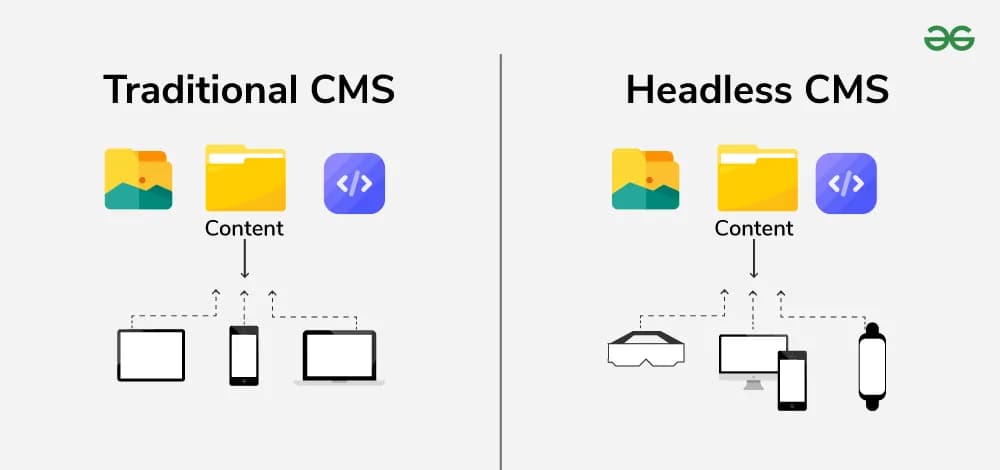
Traditional monolithic CMS platforms make it easy to launch a website and hard to do anything beyond that. Headless CMS architectures separate content from presentation — your editors work in a purpose-built admin interface while your developers consume the content over an API and render it however the channel requires. JW Digital builds headless CMS implementations on Sanity, Strapi, and Payload, paired with Next.js, React, or React Native frontends. We design the content model around your actual editorial workflows, configure access controls, set up structured content blocks and components, and deploy the whole stack with proper CI/CD and preview environments so editors can verify changes before publishing.

Get a Headless CMS QuoteView Our Work

Sanity, Strapi & Payload Implementations

Platform choice driven by editor experience, content model complexity, and self-hosting preferences. Sanity for real-time collaboration, Strapi for self-hosted flexibility, Payload for TypeScript-native architectures.

API-First Content Delivery

GraphQL or REST content APIs with CDN caching, incremental static regeneration for Next.js, and webhook-driven rebuilds — so content updates appear within seconds without rebuilding the entire site.

Custom Content Modelling & Roles

Content model designed around your editorial workflows — structured blocks, reusable components, validation rules, role-based access, and approval workflows where multi-stage publishing matters.

Multi-Channel & Multi-Frontend Delivery

A single content source powers website, mobile app, in-store kiosks, partner channels, and email — with channel-specific content variants where editors need them.

Why it matters

When Headless CMS Is the Right Choice — and When It Isn't

Headless is a deliberate architecture decision, not a default upgrade — it pays off when your content is consumed by more than one frontend or when your editors have outgrown WordPress

  • 01

    75%

    of users judge a company’s credibility by its website

  • 02

    60%

    of all web traffic comes from mobile devices

  • 03

    3x

    higher conversion rate with modern responsive design

  • 04

    90%

    of buyers visit a company’s website before contacting them

Why you need headless cms developmentJW Digital
Why you need headless cms development

The bottom line

Headless CMS has been heavily marketed as a universal upgrade from WordPress, which has led plenty of businesses to migrate to a headless setup that didn't actually need one. We are honest about this. If your content is only ever consumed by a single website, your editors are happy in WordPress's interface, and your performance is not bottlenecked by the platform — staying on a traditional CMS is often the right call. The migration cost is real, the editor retraining is real, and the architectural complexity goes up. Headless becomes the right choice when one of these is genuinely true: your content needs to be consumed by multiple frontends (website plus mobile app plus in-store kiosks plus partner channels); your content model is too structured for WordPress's flat post-and-page approach (think product catalogues, event listings, location data, multi-language sites); your editorial workflow needs multi-stage approval, role-based access, or real-time collaboration that monolithic CMSes don't handle gracefully; or your performance requirements demand a properly statically-generated frontend that consumes content over an API rather than rendering it via PHP at request time. For those use cases, headless is transformative. JW Digital builds headless CMS implementations on Sanity, Strapi, and Payload — chosen by editor experience, content model complexity, and self-hosting preference. We design the content model around your real editorial workflows, configure access controls and approval flows where they matter, and pair the CMS with Next.js, React, or React Native frontends that consume the content efficiently. We coordinate with our custom API development, bespoke website design, and managed UK hosting teams so the entire stack is owned by the same engineers.
Request a CMS DemoFree 30-min consultation · No obligation
What's Included

What's Included in Headless CMS Development

End-to-end CMS engineering — platform selection, content modelling, frontend integration, training, and handover

1

Platform Selection & Architecture Documentation

Written rationale for the platform choice (Sanity, Strapi, Payload, or other) based on editor experience requirements, content complexity, and self-hosting preferences — paired with architecture documentation covering deployment, scaling, and ongoing maintenance.

2

Content Modelling & Schema Design

Content types, fields, relationships, validation rules, reusable component blocks, and structured content for SEO — designed around the real workflows your editors run, not abstracted from a template.

3

Frontend Integration & Performance Tuning

Next.js, React, or React Native integration with GraphQL or REST content APIs; CDN caching; incremental static regeneration; webhook-driven rebuilds — so editors see their updates appear within seconds, not minutes.

4

Preview Environments & Editorial Workflow

Working preview URLs for unpublished content, multi-stage approval workflows where multiple teams publish content, draft autosave, and version history so editors can confidently iterate without fear of breaking production.

5

Role-Based Access & Audit Logging

Granular permissions for editors, marketers, developers, and external contributors; audit logging that tracks who changed what and when; and the access controls needed for enterprise compliance reviews.

6

Migration, Training & Documentation

Scripted migration from WordPress or your existing CMS preserving content, SEO metadata, and media; hands-on editor training; written documentation; and post-launch support so the team can take it forward independently.

Get in Touch With Us
Our Process

Our Headless CMS Development Process

Content-modelling-first, editor-aware, and delivered with preview environments your team will actually use

  1. 1

    Content Workflow Discovery

    We sit with the editors and content producers who will actually use the CMS day-to-day — understanding what they publish, how often, who reviews what, where the current process is friction, and which workflows need approval steps. The CMS gets designed around real editorial behaviour, not the org chart.

  2. 2

    Platform Selection & Architecture

    Sanity for real-time collaboration and editor experience polish; Strapi for self-hosted flexibility and full data ownership; Payload for TypeScript-native architectures where developers want code-first content modelling. We pick the platform that fits the team and the workflow — and document why in writing.

  3. 3

    Content Model & Schema Design

    Content types, fields, relationships, validation rules, and reusable component blocks are designed before any frontend work begins. The model balances editor flexibility (reusable blocks, drag-and-drop layouts) with structural rigour (typed fields, validation, required references) so editors can build pages without breaking the design.

  4. 4

    Frontend Integration & Preview Environments

    We integrate the CMS with your Next.js, React, or React Native frontend using GraphQL or REST APIs. CDN caching, incremental static regeneration, and webhook-driven rebuilds are configured so content updates appear in seconds without rebuilding the entire site. Preview environments let editors see their changes before publishing — and they actually work.

  5. 5

    Access Control, Approval Workflows & Migration

    Role-based access for editors, marketers, and developers. Multi-stage approval workflows where multiple teams publish content. Migration from your existing CMS (most often WordPress) with content, SEO metadata, and media preserved — using scripted migration tools rather than manual re-entry.

  6. 6

    Editor Training, Documentation & Handover

    Hands-on editor training, written documentation covering the content model and common publishing scenarios, and a video walkthrough for future hires. The CMS is genuinely usable from day one — not a tool your editors avoid because nobody knows where the publish button went.

Our web design process - JW Digital
Our Pricing

Headless CMS Development Pricing

Pricing scales with content model complexity, the number of content types and components, frontend integration scope, and whether migration from an existing CMS is required. A focused headless implementation for a marketing site typically falls between £900 and £4,000. A complex multi-region, multi-language CMS with approval workflows and migration from WordPress typically falls between £4,000 and £20,000. We produce a written scope and fixed quote against agreed deliverables. Clients often pair headless CMS work with our bespoke website design, custom API development, and managed UK hosting services so the entire content delivery stack is owned by the same engineers.
API & Database Cost Calculator

Free to Use

Estimate your project cost in just a few clicks

  • Built with Sanity, Strapi, or Payload
  • Full API integration and documentation
  • Custom schema and dashboard setup
  • Training and post-launch support
Use Our API & Database Cost Calculator

Once you have a rough estimate, you can use it as a starting point for your project planning. If you need something more tailored, JW Digital can then provide a bespoke quote based on your exact goals and requirements.

Free tools

Helpful Tools for Builders

Estimate scope, audit your site, and plan your data and integration requirements before development begins.

View all tools
Free
🗄️

API & Database Calculator

Estimate backend, API and database project cost based on endpoints, integrations, data model and scale.

API Cost CalculatorDatabase PricingBackend CostIntegration CostAPI Budget
Open tool
Free
📊

Website Grader

Instant website score across page speed, mobile friendliness, meta tags and structured data.

Page SpeedMobileSEOStructured Data
Open tool
Free
📱

App Cost Calculator

Estimate mobile and web app development cost based on platforms, features, backend and integrations.

App Cost CalculatorApp Development PricingMobile App QuoteApp BudgetMVP Cost
Open tool
Related Services

Explore More Database & API Services

Browse related database design, API integration, and infrastructure services that power scalable digital products.

Custom API Development - JW Digital

Custom API Development

Build powerful, secure APIs for your business

JW Digital develops custom APIs for web, mobile, and SaaS platforms. Our APIs are fast, scalable, and built with security at their core — enabling seamless data exchange across systems.

From £900

API Integration and Automation - JW Digital

API Integration & Automation

Automate workflows by connecting your systems

Connect your CRMs, ERPs, marketing tools, and internal apps with reliable API integrations and workflow automation — eliminating manual data entry and unlocking new business efficiency.

From £600

Database Design and Optimisation - JW Digital

Database Design & Optimisation

High-performance, scalable database architecture

We design, optimise, and maintain relational and NoSQL databases that grow with your business. From schema design to indexing and query tuning, JW Digital ensures peak performance.

From £700

Specialist Services

Related Digital Services

A robust data layer pairs naturally with the rest of your digital stack — explore the build, growth, and platform services we deliver alongside it.

Bespoke Website Design

Learn more about this service

eCommerce Development

Learn more about this service

App Development Services

Learn more about this service

Headless CMS Done Right — Editor-Friendly and Built to Last

Get a scoped headless CMS project from JW Digital. We model your content around real editorial workflows, integrate cleanly with your frontend, train your team properly, and pair the work with the rest of our stack — design, hosting, and SEO — when you need it.

Fast Turnaround
Fully Secure
Fixed Pricing

Call Us

0161 399 4659

Mon–Sat • 8 am–8 pm

Email Us

enquiries@jw-digital.co.uk

Replies within 2 hours

Start a Project

Request a Free Demo

No obligation • Takes 2 minutes

© 2026 JW Digital • Fast & Reliable Digital Solutions • Built in Manchester UK

JW Digital Website Footer

My Logo

Empowering UK businesses with bespoke web design, app development, and digital marketing solutions that drive measurable results.

0161 399 4659

Our Services

  • Web Design Services UK
  • SEO Agency UK
  • E-commerce Web Design
  • App Development Company UK
  • Database & API Development
  • Website Hosting & Maintenance
  • Digital Marketing Agency UK

Tools

  • Invoice Generator
  • Free Website Grader
  • Website Cost Calculator
  • SEO Cost Calculator
  • App Cost Calculator
  • Ecommerce Cost Calculator
  • Meta Tag Checker
  • API & Database Calculator
  • GBP Profile Checker
  • IndexNow Sitemap Submitter
  • CIS Tax Calculator
  • Trades Quote Generator
  • Schema Markup Generator
  • XML Sitemap Generator
  • Robots.txt Generator
  • Open Graph Preview Generator
  • Colour Contrast Checker
  • Marketing ROI Calculator
  • Website Revenue Loss Calculator
  • Lead Value Calculator
  • Local Business Schema Generator
  • Indexability Checker
  • Schema Validator
  • Local SEO Audit
  • AI Overview Readiness Checker
  • NAP & Citation Checker
  • AI Brand Visibility Checker
  • Website Carbon Calculator
  • Salesforce Web-to-Lead Generator
  • Salesforce Integration Cost Calculator

Company

  • About Us
  • Blog
  • Contact & Support
  • Terms & Conditions
  • Privacy Policy

Visit Us On

  • Trustpilot
  • Yell
  • Google Reviews

Follow Us

© 2026 JW Digital Services Ltd. All rights reserved.

Registered in England & Wales · Co. No. 15243830 · ICO Reg. No. ZC150057

Recent Projects

Recent Database & API Projects

Explore some of the data platforms, APIs, and integrations JW Digital has built for UK businesses across SaaS, eCommerce, and enterprise systems.

Browse a selection of our recent web design and development projects for businesses across a range of industries, including healthcare, construction, hospitality, trade services, recruitment, and professional services. Each project is designed to balance performance, usability, branding, and SEO foundations.
MyFRCR — UK Radiology Exam Platform Healthcare Application project for Healthcare / Medical Education business in London

MyFRCR — UK Radiology Exam Platform

Healthcare Application

The UK's premier FRCR 2B exam platform: 1,250+ short cases, 600+ long cases, full lossless DICOM images at diagnostic workstation quality — built on Next.js, Golang, and AWS.

Industry:

Healthcare / Medical Education

Location:

London

Project Type:

Web Application Development

Technologies

Next.js
Golang
AWS
+3
View Project
Challenge Yourself — Fitness PWA Web Application project for Health & Fitness business in UK

Challenge Yourself — Fitness PWA

Web Application

Progressive web app for structured fitness transformation: 12-week training programmes, personalised workout execution, progress tracking, and integrated coaching.

Industry:

Health & Fitness

Location:

UK

Project Type:

Web Application Development

Technologies

Next.js
PWA
TypeScript
+1
View Project
SRMT — Muay Thai Training Sports & Fitness project for Martial Arts / Sports & Fitness business in Broadheath, Altrincham

SRMT — Muay Thai Training

Sports & Fitness

Modern website for Altrincham's premier Muay Thai gym: class schedules, online booking, membership information, and a mobile-first experience for 380+ active members.

Industry:

Martial Arts / Sports & Fitness

Location:

Broadheath, Altrincham

Project Type:

Website Design & Development

Technologies

Next.js
Booking Integration
Mobile First
+1
View Project
Florida Car Hire For Less E-commerce / Booking Platform project for Car Rental / Travel business in Manchester, UK (serving Florida & US)

Florida Car Hire For Less

E-commerce / Booking Platform

UK-built car hire booking platform for Florida and the US: zero deposit reservations, free cancellations, Stripe payments, and Zest API integration — built in Next.js.

Industry:

Car Rental / Travel

Location:

Manchester, UK (serving Florida & US)

Project Type:

E-commerce & Booking Platform

Technologies

Next.js
Stripe
Zest API
+2
View Project
Anslow Building Surveyors Professional Services project for Building Surveying / Property business in Altrincham, Greater Manchester

Anslow Building Surveyors

Professional Services

Professional website for an independent RPSA-qualified building surveying practice in Altrincham — lead generation, service clarity, and trust for North West property buyers.

Industry:

Building Surveying / Property

Location:

Altrincham, Greater Manchester

Project Type:

Website Design & Development

Technologies

Next.js
Local SEO
Quote System
+1
View Project
SC Plumbing & Heating Trade Services project for Plumbing & Heating business in Liverpool, Merseyside

SC Plumbing & Heating

Trade Services

Lead generation website for a Gas Safe registered plumber in Liverpool: 150+ 5-star reviews, emergency service positioning, and a mobile-first enquiry flow for Merseyside.

Industry:

Plumbing & Heating

Location:

Liverpool, Merseyside

Project Type:

Website Design & Development

Technologies

Next.js
Local SEO
Mobile First
+1
View Project
Vince Ward Gardens Landscaping & Garden Design project for Landscaping / Garden Design business in Manchester

Vince Ward Gardens

Landscaping & Garden Design

Bespoke website for a Manchester landscaping business — project gallery, service structure, and an enquiry-focused design for garden design and landscaping clients.

Industry:

Landscaping / Garden Design

Location:

Manchester

Project Type:

Website Design & Development

Technologies

Next.js
Gallery System
Contact Forms
+1
View Project
Gin Can Altrincham Hospitality project for Hospitality / Bars business in Altrincham, Greater Manchester

Gin Can Altrincham

Hospitality

Website for Altrincham's premium gin and cocktail bar: 50+ gins, late-night licence, and a brand-led experience for Kings Court's most intimate venue.

Industry:

Hospitality / Bars

Location:

Altrincham, Greater Manchester

Project Type:

Website Design & Development

Technologies

Next.js
Menu System
Booking Integration
+1
View Project
View Full Portfolio

Frequently Asked Questions

Most Asked Questions

FAQs

Common questions about API development, database design, integrations, headless CMS, cloud databases, and ongoing data infrastructure with JW Digital.

Illustration representing frequently asked questions

WordPress is monolithic — content storage, the admin interface, and the public-facing website are all the same system, with PHP rendering pages at request time. A headless CMS separates content from presentation — your editors work in a purpose-built admin interface while your developers consume the content over an API and render it however the channel requires. This decoupling enables multi-frontend publishing, better performance through static generation, and significantly more structured content models. It also adds operational complexity and a real migration cost, which is why headless is a deliberate architecture decision rather than a default upgrade.

Sanity is excellent for real-time collaboration, editor experience polish, and content models that benefit from structured rich text. Strapi is the right choice when you want full self-hosting, data ownership, and a Node-native backend you can extend. Payload is ideal when your team is TypeScript-native and wants code-first content modelling with strong developer ergonomics. We help you pick during scoping based on editor experience requirements, content model complexity, and self-hosting preferences — rather than defaulting to whichever platform we use most.

Yes. WordPress-to-headless migration is a routine project for us — we use scripted migration tools to extract posts, pages, custom post types, taxonomies, media, and SEO metadata, then map them to the new content model. Content history, slugs, and SEO redirects are preserved so search rankings carry over. The migration runs alongside a content-model review because WordPress's flat post-and-page structure often hides modelling opportunities that headless surfaces.

Headless sites paired with Next.js and proper CDN caching typically deliver Largest Contentful Paint scores in the sub-second range, which is significantly faster than equivalent WordPress sites running on shared hosting. The speed comes from a combination of static generation, edge delivery, and the absence of per-request PHP rendering. We measure baseline performance before migration and verify the improvement after, so the gain is documented rather than assumed.

Yes — for eCommerce sites where content (product editorial, blog, brand storytelling) and commerce (catalogue, cart, checkout) are managed separately. A common architecture pairs Shopify or a custom commerce backend with Sanity or Payload for content. The headless CMS handles editorial, landing pages, blog, and structured product enrichment; the commerce platform handles inventory, pricing, and checkout. The two integrate via API and the frontend consumes both.

Yes, when configured correctly. We model SEO metadata (titles, descriptions, schema markup, OG tags, canonical URLs) as structured content fields so editors maintain SEO data alongside their content. Sitemaps, robots.txt, and structured data are generated from the CMS content, and the Next.js frontend renders proper meta tags and JSON-LD on every page. For ongoing SEO, we coordinate with our SEO agency team.

Yes — that is one of the strongest reasons to go headless. A single content source can power a marketing website, a mobile app, in-store kiosks, partner content distribution, and email campaigns. Channel-specific content variants are supported where editors need them. The model is particularly powerful for brands with multiple touchpoints that need consistent messaging.

Every project includes hands-on editor training, written documentation covering the content model and common publishing scenarios, and a video walkthrough that new hires can use later. Ongoing support is available on retainer for content-model evolution as your business changes, additional content types, and integration extensions. We do not believe in dropping a CMS on a team and disappearing.

Headless platforms typically have stronger approval and workflow capabilities than WordPress. Sanity supports real-time collaboration and review workflows; Payload and Strapi support multi-stage approval and role-based publishing. We configure these workflows around your real editorial process during scoping — single-author publishing, dual-review approval, or multi-stage editorial workflows are all supported.