

The bottom line
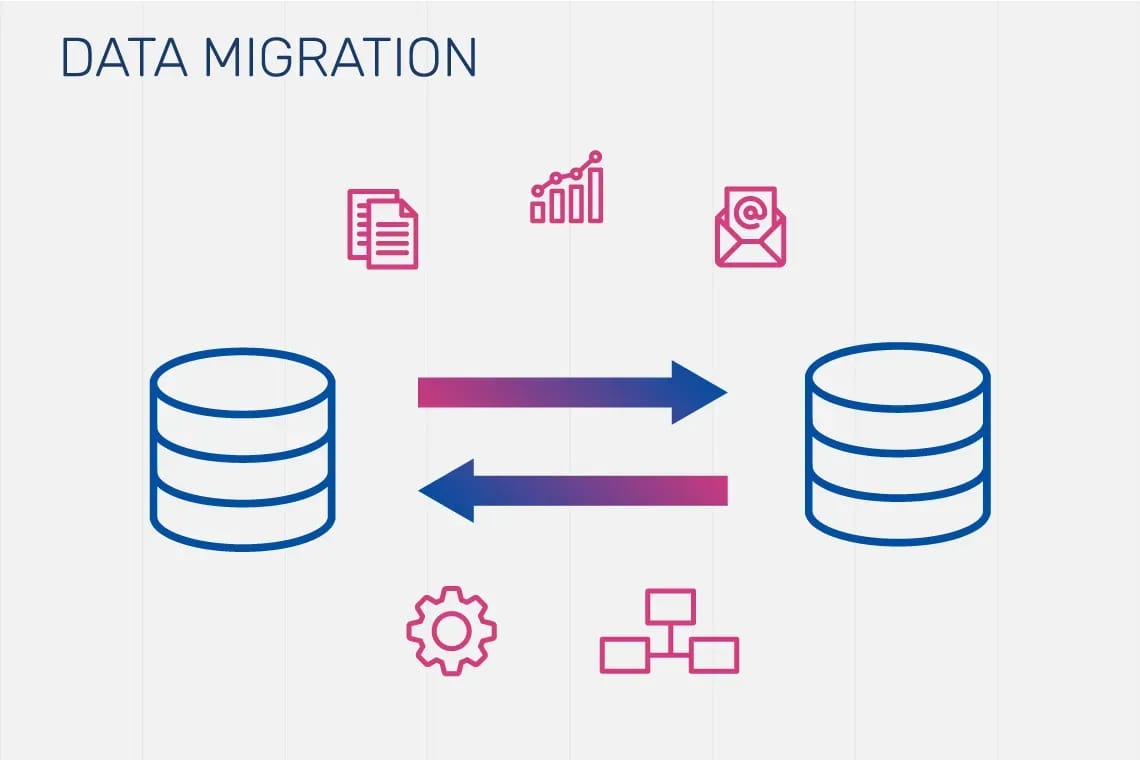
Every business eventually has to move data. Platform migrations (Magento to Shopify, Salesforce to HubSpot, on-premise SQL to managed cloud). Database upgrades (MySQL 5 to PostgreSQL 15, legacy proprietary systems to modern relational stores). Consolidations after acquisitions. Cloud lift-and-shifts. New SaaS rollouts that need historical data populated. Every one of these projects sits somewhere between routine and existential, depending entirely on how it's planned. The migrations that go badly almost always go badly for the same reasons. The source data was not audited deeply enough, so edge cases (NULLs in unexpected columns, character encoding issues, dates outside the expected range, duplicate primary keys after deduplication) surface mid-migration. The cut-over plan didn't allow for rollback, so when something went wrong the only option was forward. The validation was 'spot-check a few records' rather than systematic row-count and checksum comparison. The team running it underestimated how long bulk operations take at production scale and tried to do them in a four-hour maintenance window. No staging rehearsal was performed. JW Digital approaches migrations as engineering projects with a documented plan rather than improvised events. Source and target audit, schema mapping, transformation rules, validation strategy, staged cut-over with rollback paths that stay open until success criteria are met, and a rehearsal against production-scale data in a staging environment before the real cut-over. For ongoing sync requirements — CRM-to-ERP, eCommerce-to-accounting, multi-region replication, system-of-record consolidation — we build durable pipelines with retry logic, dead-letter handling, reconciliation jobs, and observability so silent drift becomes impossible. The work pairs naturally with our database design, cloud database solutions, third-party API integration, and managed UK hosting services.